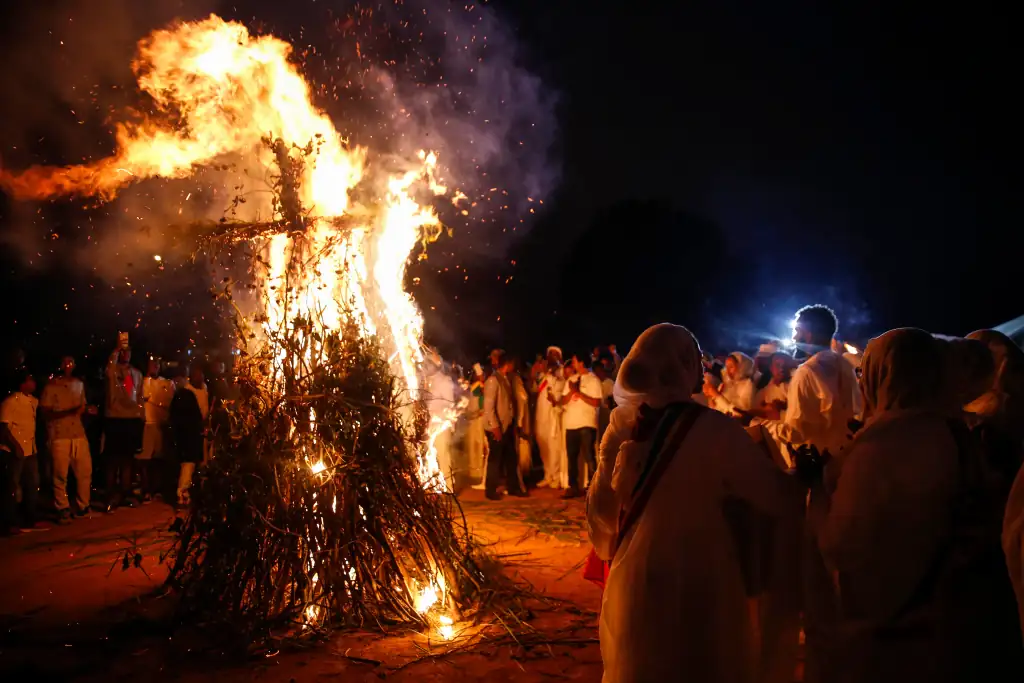
New year (Enkutatash)
እንቁጣጣሽ
Enkutatash is the Ethiopian New Year.

Dates by year
All holidays| Year | Ethiopian date | Gregorian date |
|---|---|---|
| 2018 | Meskerem 1 | Thu, September 11, 2025 |
| 2019 | Meskerem 1 | Fri, September 11, 2026 |
| 2020 | Meskerem 1 | Sun, September 12, 2027 |
| The upcoming Enkutatash is on Sunday, September 12, 2027, in 303 days. | ||
| 2021 | Meskerem 1 | Mon, September 11, 2028 |
| 2022 | Meskerem 1 | Tue, September 11, 2029 |
| 2023 | Meskerem 1 | Wed, September 11, 2030 |
| 2024 | Meskerem 1 | Fri, September 12, 2031 |
| 2025 | Meskerem 1 | Sat, September 11, 2032 |
| 2026 | Meskerem 1 | Sun, September 11, 2033 |
History
Enkutatash is the Ethiopian New Year. It is a major national and religious holiday celebrated every year on Meskerem 1st (usually September 11, or September 12 in the year before a Gregorian leap year, such as 2027). Enkutatash is sometimes referred to as Kidus Yohannes (St. John the Baptist) in religious contexts, as its observance aligns with the religious calendar established by Church scholars. Meskerem 1st is the date when the day and the night are almost equal (12 hours each), signifying a time of balance and transition.Another interpretation relates it to the end of the heavy rainy season (Kiremt). As the rain subsides, the land is renewed, flowers (especially the Adey Abeba) bloom, and the sky clears, signifying the start of a new, bright season and a fruitful year for agriculture.
How it is celebrated
The main tradition is the exchange of New Year cards and bouquets of bright yellow Adey Ababa daisies, which symbolize the transition from the dark season to a vibrant, flower-filled landscape. Girls go from house to house singing traditional songs, collecting money and fresh bread. At the family level, the holiday includes eating Doro Wot (spicy chicken stew) and the ceremonial slaughter of a sheep or goat.
Frequently asked questions
Enkutatash is on Meskerem 1. The next one is September 12, 2027 (Meskerem 1, 2020 E.C.).