
Natural environment
Ethiopia’s nature is as distinctive as its culture. Mountains that hold frost near the equator, a volcanic desert below sea level, lakes in the Rift Valley, forests where coffee began, and animals that live nowhere else. This chapter covers the climate, rivers and lakes, wildlife, protected areas and the pressures on all of them.
Climate: it is all about altitude
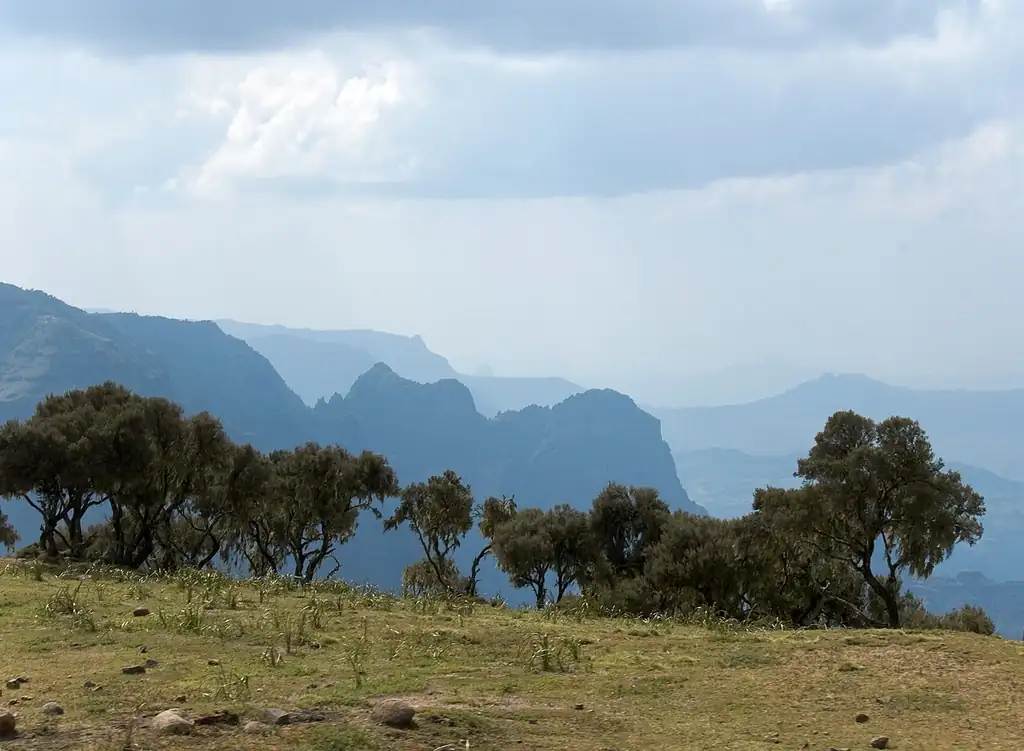
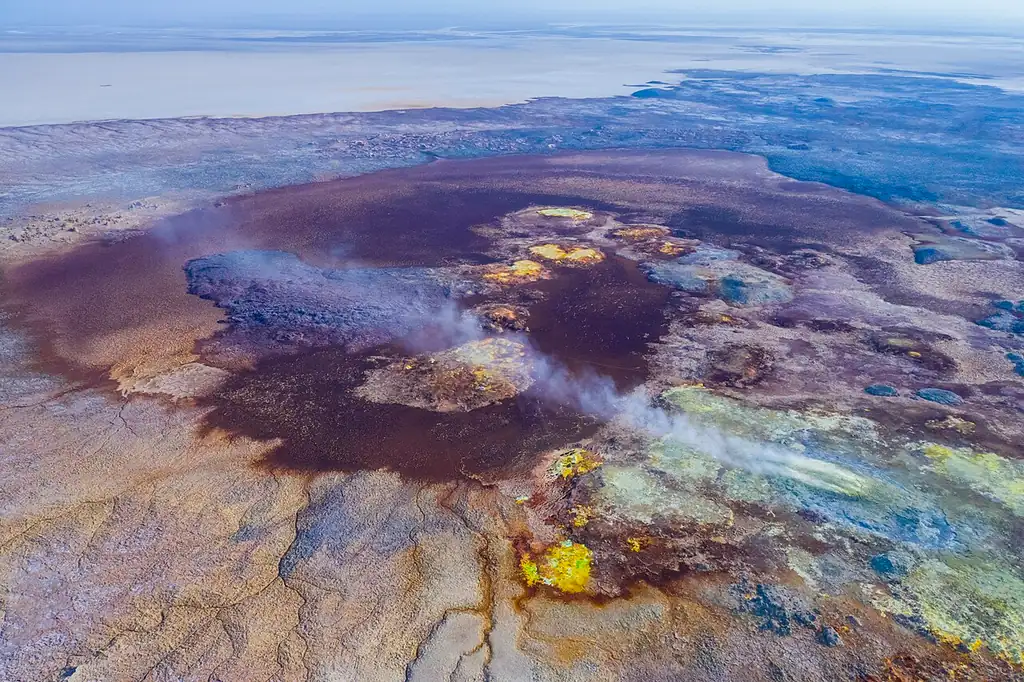
In most countries, climate follows latitude. In Ethiopia it follows height. Addis Ababa, at more than 2,300 metres, averages around 16°C year round, with cool nights, even though the city is only about nine degrees north of the equator. In the Danakil Depression, summer temperatures can pass 45°C. Ethiopians have long had names for these altitude zones.
The four traditional climate zones
| Zone | Altitude | Typical conditions |
|---|---|---|
| Wurch (alpine) | Above ~3,200 m | Cold, with frost, and Afro-alpine moorland |
| Dega (highland) | ~2,300–3,200 m | Temperate to cool: Addis Ababa, Gondar and Lalibela; barley, wheat, teff |
| Woina dega | ~1,500–2,300 m | Warm temperate; most mixed farming, with coffee at the lower end |
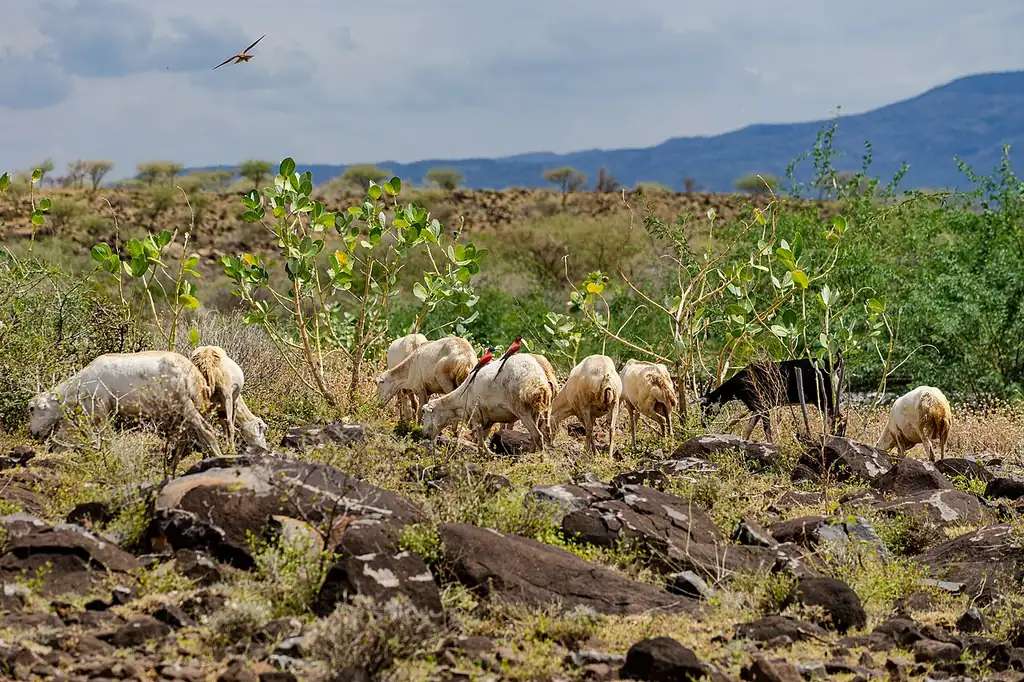
| Kolla (lowland) | Below ~1,500 m | Hot, dry to semi-arid; herding country in Afar and Somali |
The seasons
- Kiremt, the main rains, from June to September.
- Bega, the dry season, from October to January.
- Belg, the short rains, from February to May in many areas.
- The south and south-east have two rainy seasons, March to May and October to November.
Rainfall varies greatly from place to place and year to year, and has become less predictable. Ethiopia faces recurring drought (2015–16, and 2020–23 across the Horn), flash floods, rising temperatures and land degradation. It is a low-emission country that follows a “Climate Resilient Green Economy” strategy, and it hosted the second Africa Climate Summit in Addis Ababa in 2025.
Water: rivers and lakes
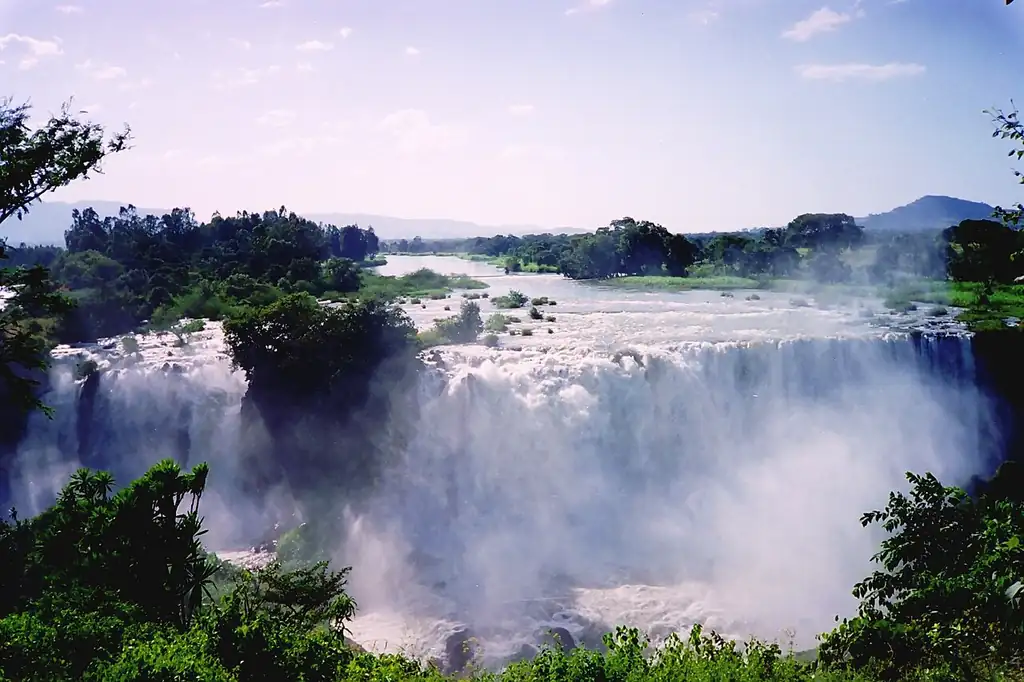
Ethiopia has 12 river basins and a huge volume of runoff that feeds the Nile, Juba–Shebelle, Omo-Turkana and Awash systems. The most famous river is the Abay, the Blue Nile, which rises in Lake Tana, cuts a vast gorge and joins the White Nile at Khartoum. The Blue Nile alone supplies about 59 percent of the Nile’s water at Aswan, and with the Tekeze/Atbara and the Sobat, roughly 85 percent comes from the Ethiopian highlands.
Other great rivers
The Tekeze (to the Atbara), the Baro–Akobo (to the Sobat), the Omo (which flows to Lake Turkana in Kenya) and the Wabe Shebelle and Genale–Dawa (towards Somalia and the Indian Ocean).
A river that never reaches the sea
The Awash flows into the salt lakes of Afar and ends there.
The lakes
Tana is the largest, at about 3,000 km², with island monasteries. In the Rift: Ziway, Langano, Abaya, Chamo, Awasa, Abijatta, Shala (the deepest) and, in Afar, Afrera and Abbe, plus the crater lakes of Bishoftu.
The problems
Water hyacinth on Lake Tana, pollution and over-abstraction (Abijatta and Ziway), poor drinking-water access in rural areas, and the politics of shared rivers.
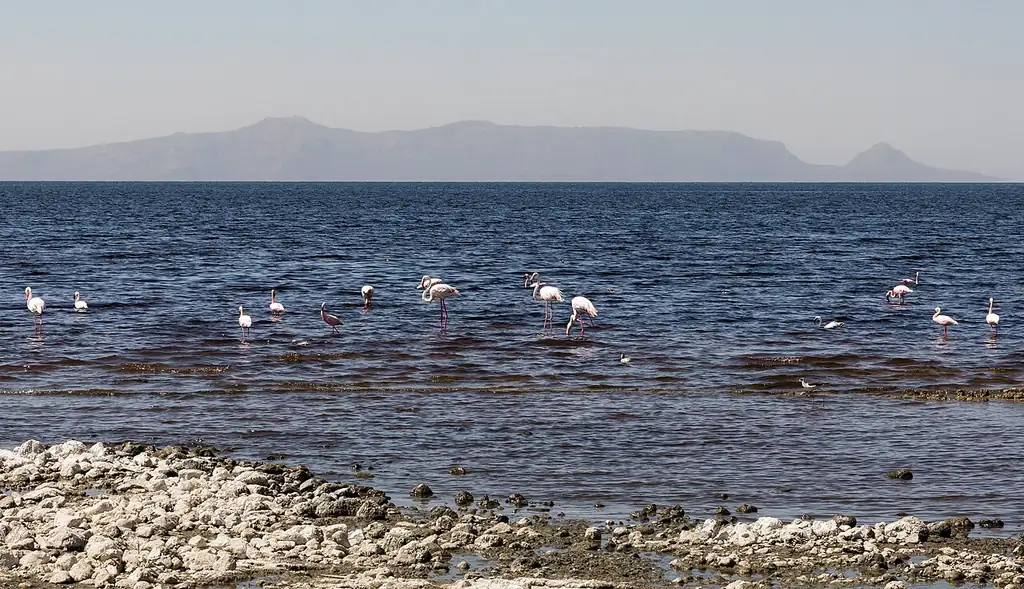
Wildlife and biodiversity
Ethiopia belongs to two global biodiversity hotspots, the Eastern Afromontane and the Horn of Africa, and is among the richest African countries for endemic plants and birds. It has more than 860 bird species, about 20 of them found nowhere else (such as the Wattled Ibis, Blue-winged Goose, Yellow-fronted Parrot and Abyssinian Longclaw), and over 280 mammals.
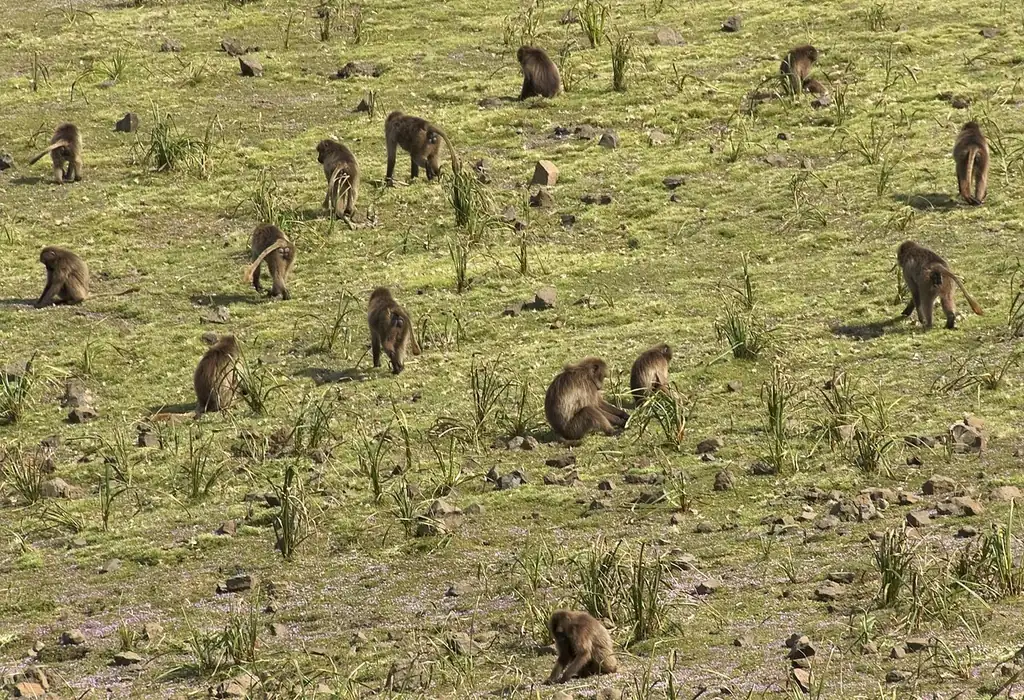
- Gelada. The only grass-eating primate, easily recognised by the red patch on its chest.
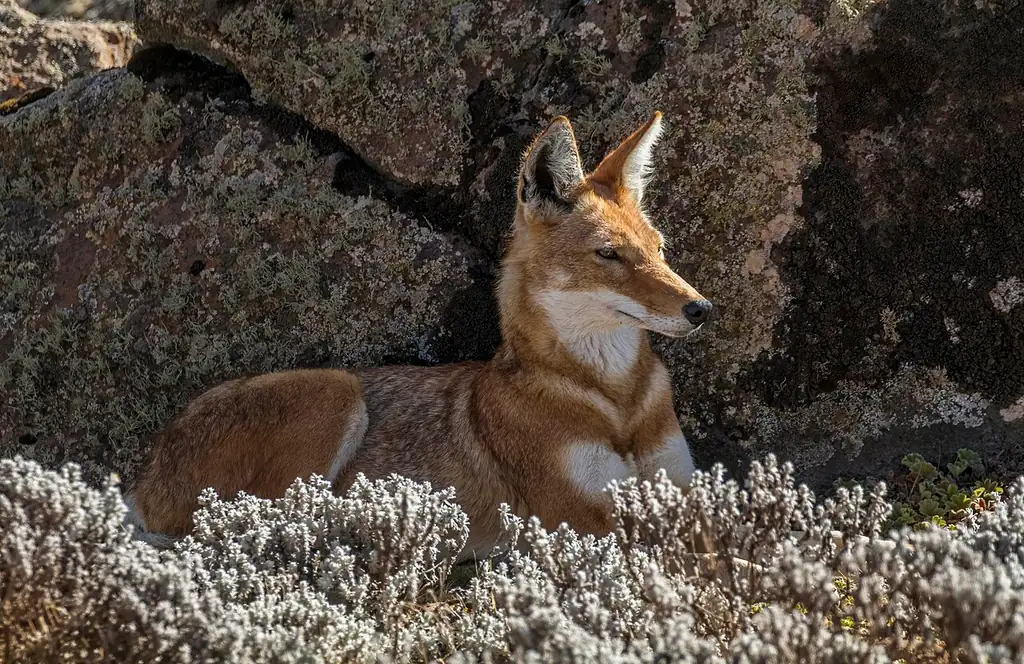
- Ethiopian wolf. The world’s rarest canid, with about 450 to 500 left, mostly in Bale.
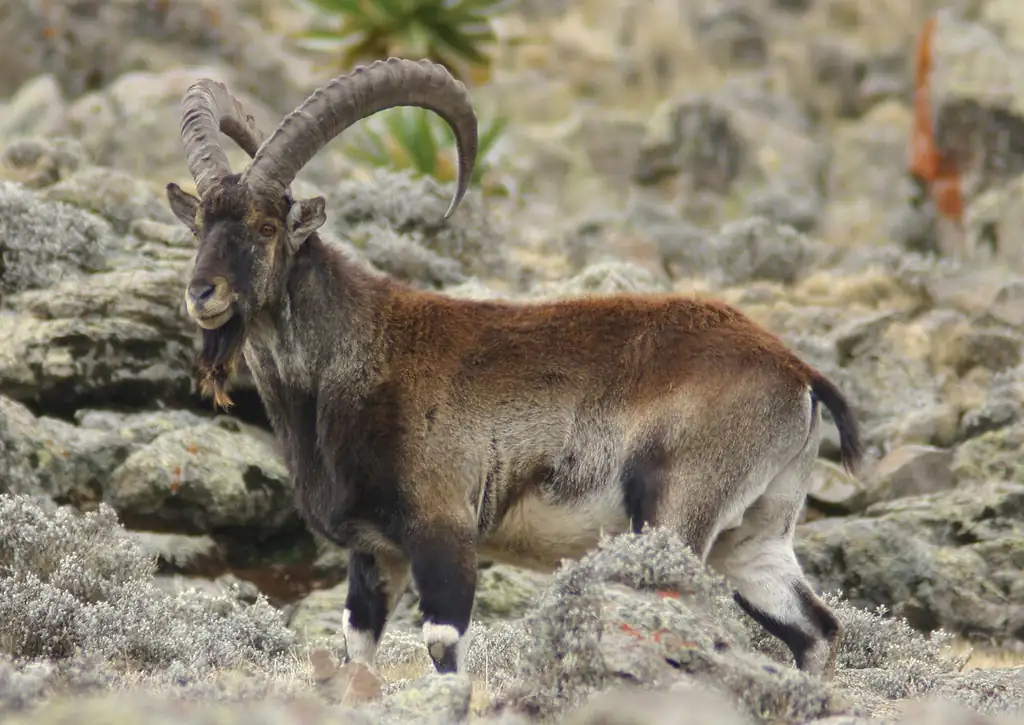
- Walia ibex. Found in the Simien Mountains, with only about 1,000 to 1,500 remaining.
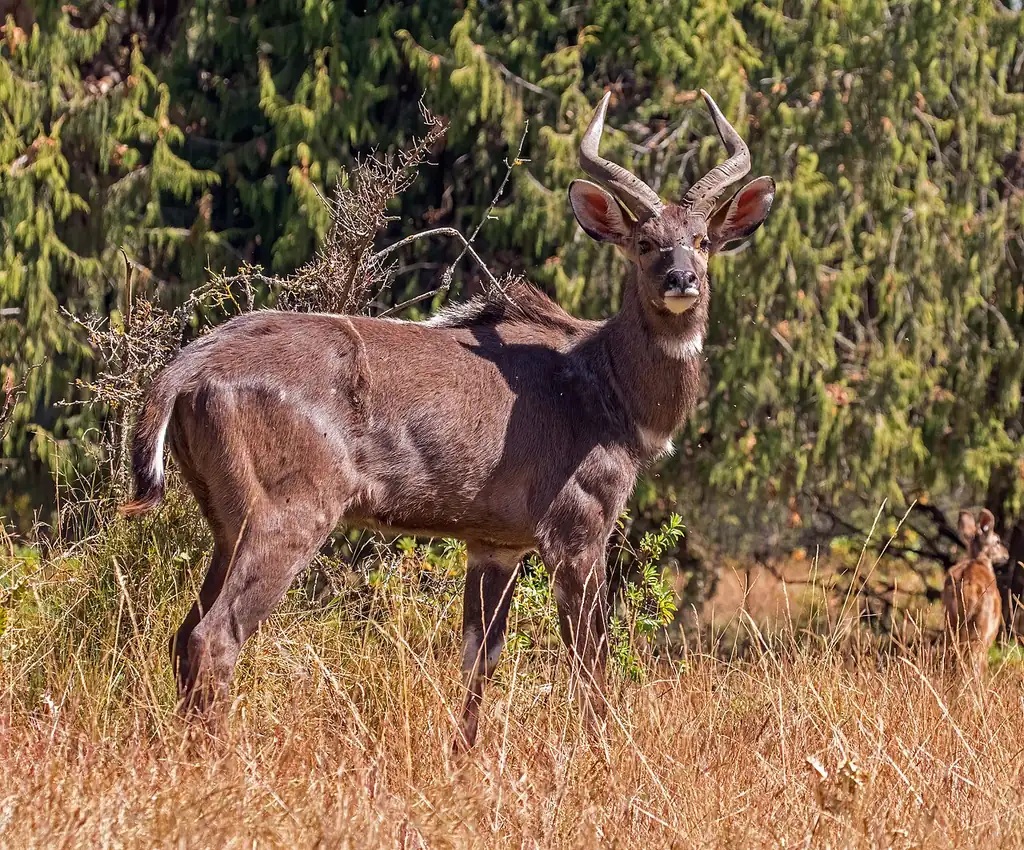
- Mountain nyala. An endemic antelope of Bale. Others that are endemic or nearly so include Menelik’s bushbuck and Swayne’s hartebeest.
- Big game of the lowlands. African wild dog, lion, leopard, elephant (in Babile and Omo), Grevy’s zebra, beisa oryx, Soemmerring’s gazelle, and the black-maned Abyssinian lion.
Among plants, wild Arabica coffee, giant lobelia, enset, Hagenia forests and Afro-alpine heather stand out, and Ethiopia is one of the eight centres of crop origin identified by the botanist Vavilov. The threats are familiar: habitat loss to farmland, grazing, fuelwood and charcoal; poaching and encroachment in parks; conflict between people and wildlife; and a changing climate that pushes species uphill.
Protected areas
| Area | Why it matters |
|---|---|
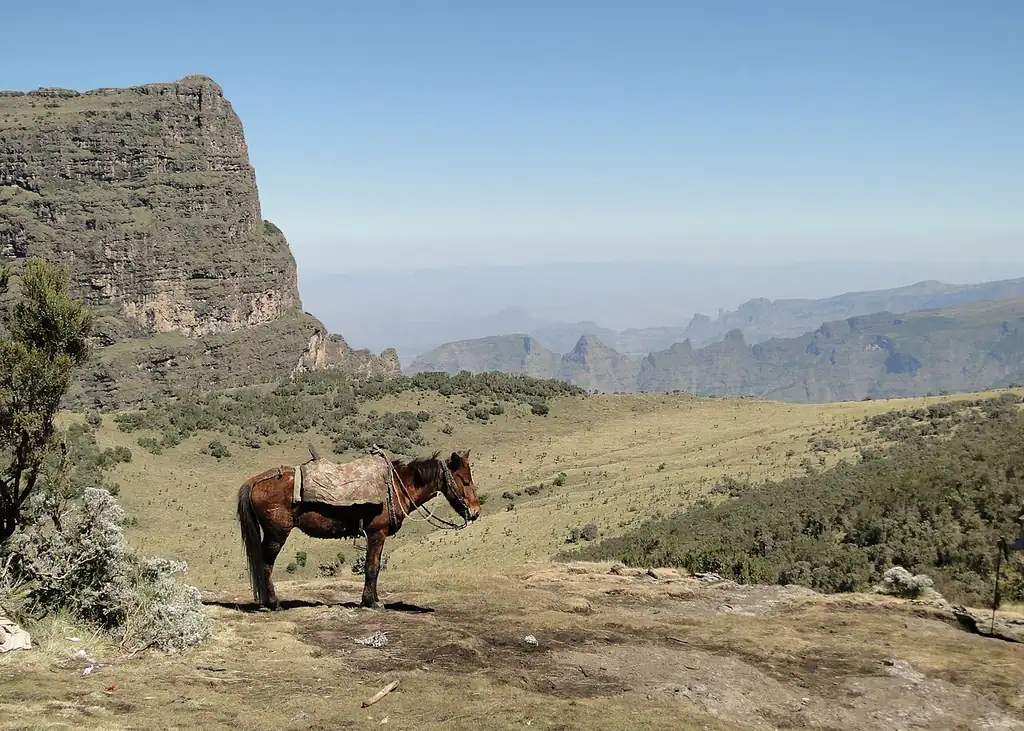
| Simien Mountains National Park | UNESCO natural site (1978). A dramatic escarpment, Ras Dejen, gelada, Walia ibex and Ethiopian wolf |
| Bale Mountains National Park | UNESCO natural site (2023). The Sanetti Plateau, Harenna forest, the Ethiopian wolf and mountain nyala; the source of rivers serving millions downstream |
| Awash National Park | Savanna, the Fantale volcano, hot springs, oryx and kudu |
| Nechisar National Park | Between Lakes Abaya and Chamo, near Arba Minch; zebra and crocodiles |
| Omo and Mago National Parks | The remote south-west savanna, near the Lower Omo Valley |
| Gambela National Park | Wetlands and the white-eared kob migration |
| Biosphere reserves | Kafa (wild coffee forests), Sheka, Yayu, Lake Tana and Lake Hawassa, among others |
Forests, soil and the land itself
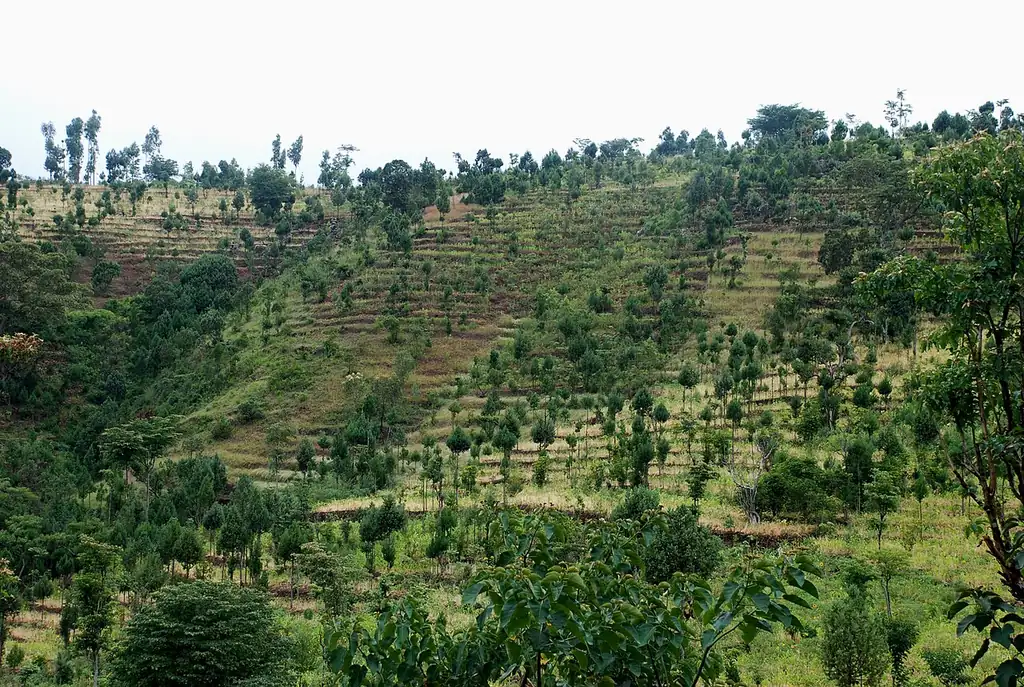
Forest cover has shrunk dramatically. It is often said to have fallen from about 40 percent of the land a century ago to under 5 percent by the 1990s, and the government now puts it at about 15 percent, using a broader definition that includes woodland and shrub. Soil erosion in the highlands, among the most severe in Africa, has driven decades of terracing and watershed work, including public-works schemes under the safety-net programme.
City environments face their own problems. The collapse of a waste mountain at Koshe in Addis Ababa in March 2017 killed more than 110 people and led to the Reppi waste-to-energy plant, opened in 2018.
Energy, resources and hazards
Hydropower dominates, as described in the economy chapter. Wind farms (Ashegoda and Adama), geothermal plants and solar add capacity, and natural-gas fields in the Ogaden Basin, Calub and Hilala, are being developed. Mining covers gold, tantalum, potash, salt, limestone and opal, and the Danakil potash deposits are a major prospect. Artisanal mining raises environmental and safety issues. More than 80 percent of the energy households use is wood, charcoal or dung.
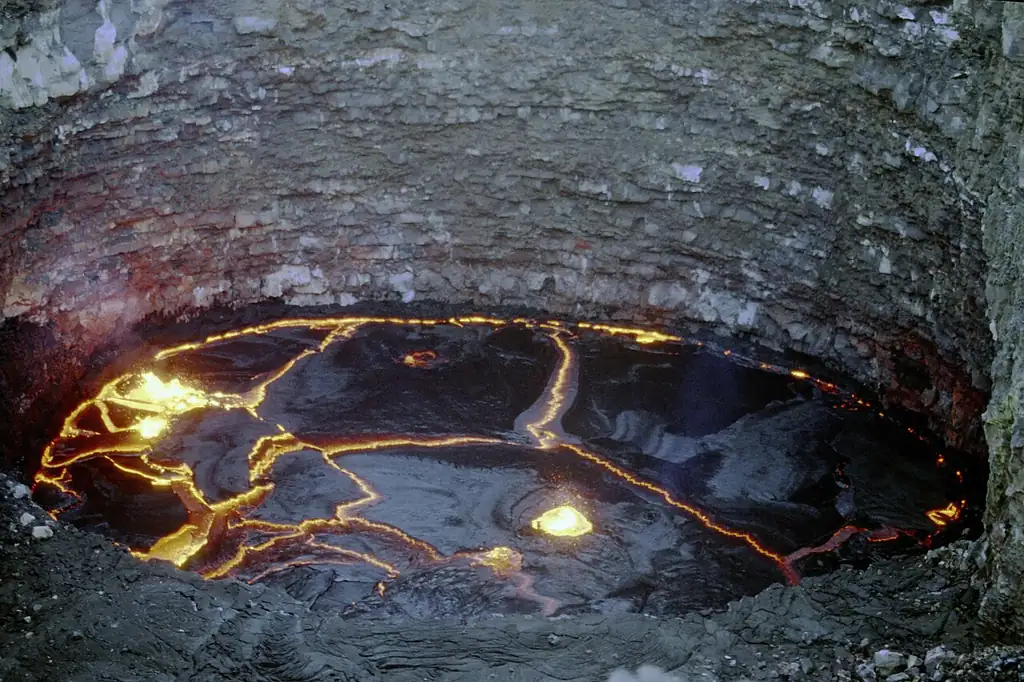
Natural hazards are part of life. They include cyclical drought and famine; floods on the Awash, Omo and Baro; earthquakes and volcanic activity along the Rift (for example the Fentale and Dofan swarms in the Awash region in 2024–25); landslides, such as the Gofa landslides in July 2024 that killed more than 250 people; cyclones from the Indian Ocean affecting the Somali region; and locust invasions.
ሁሉም ምዕራፎች
- 01 · Country at a glance
- 02 · History & civilization
- 03 · People & society
- 04 · Religion & belief
- 05 · Culture & everyday life
- 06 · Government & institutions
- 07 · Economy & development
- 08 · Natural environment
- 09 · Travel & tourism
- 10 · Practical living guide
- 11 · Ethiopia in the world
- 12 · Knowledge & reference