
People & society
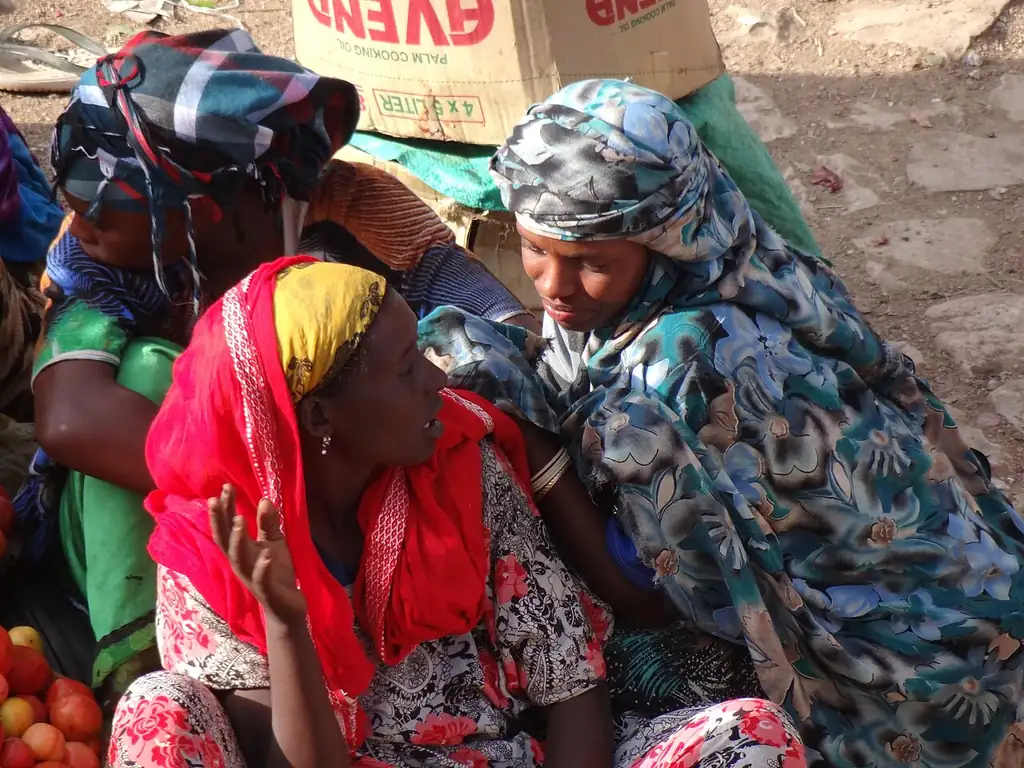
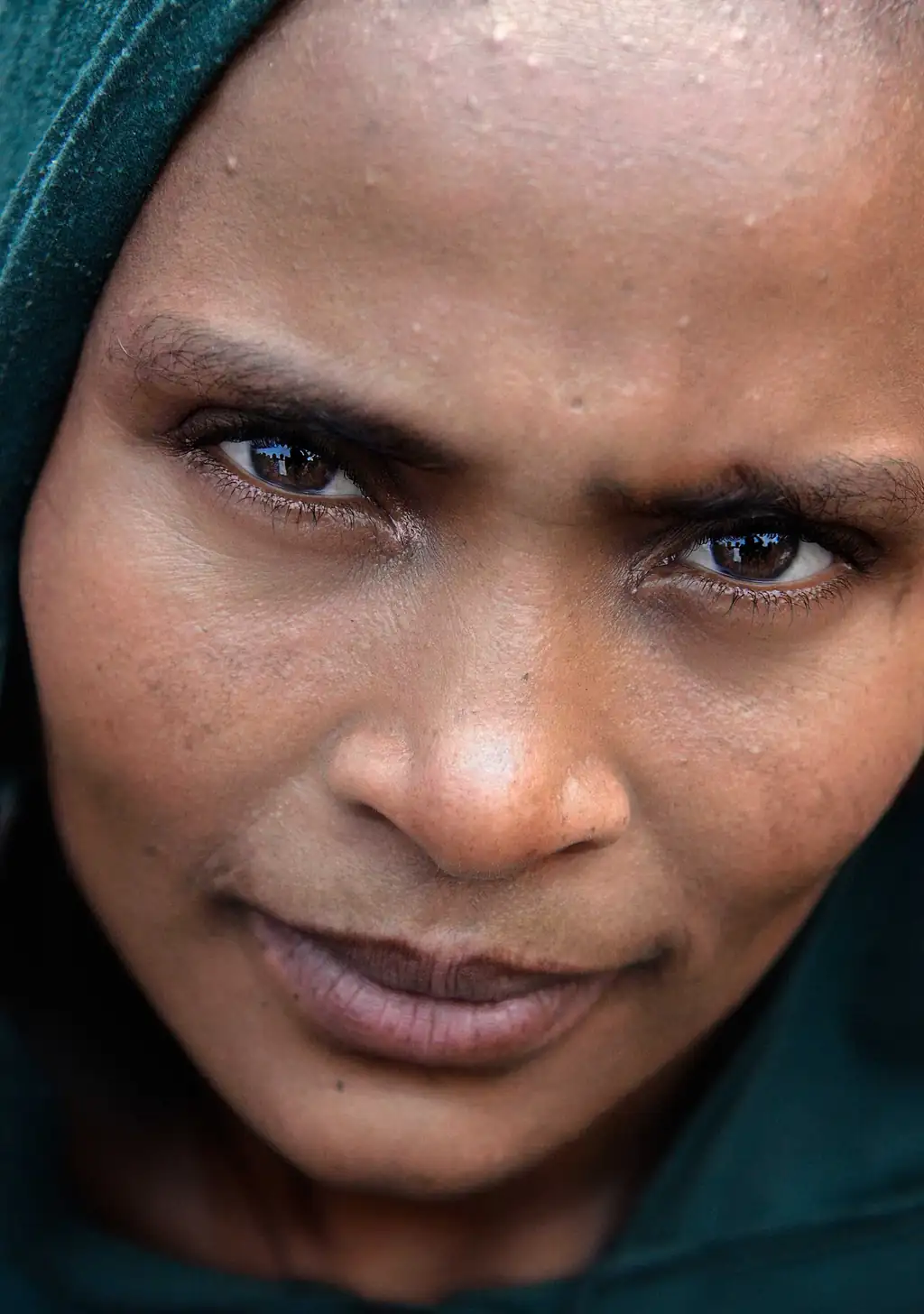
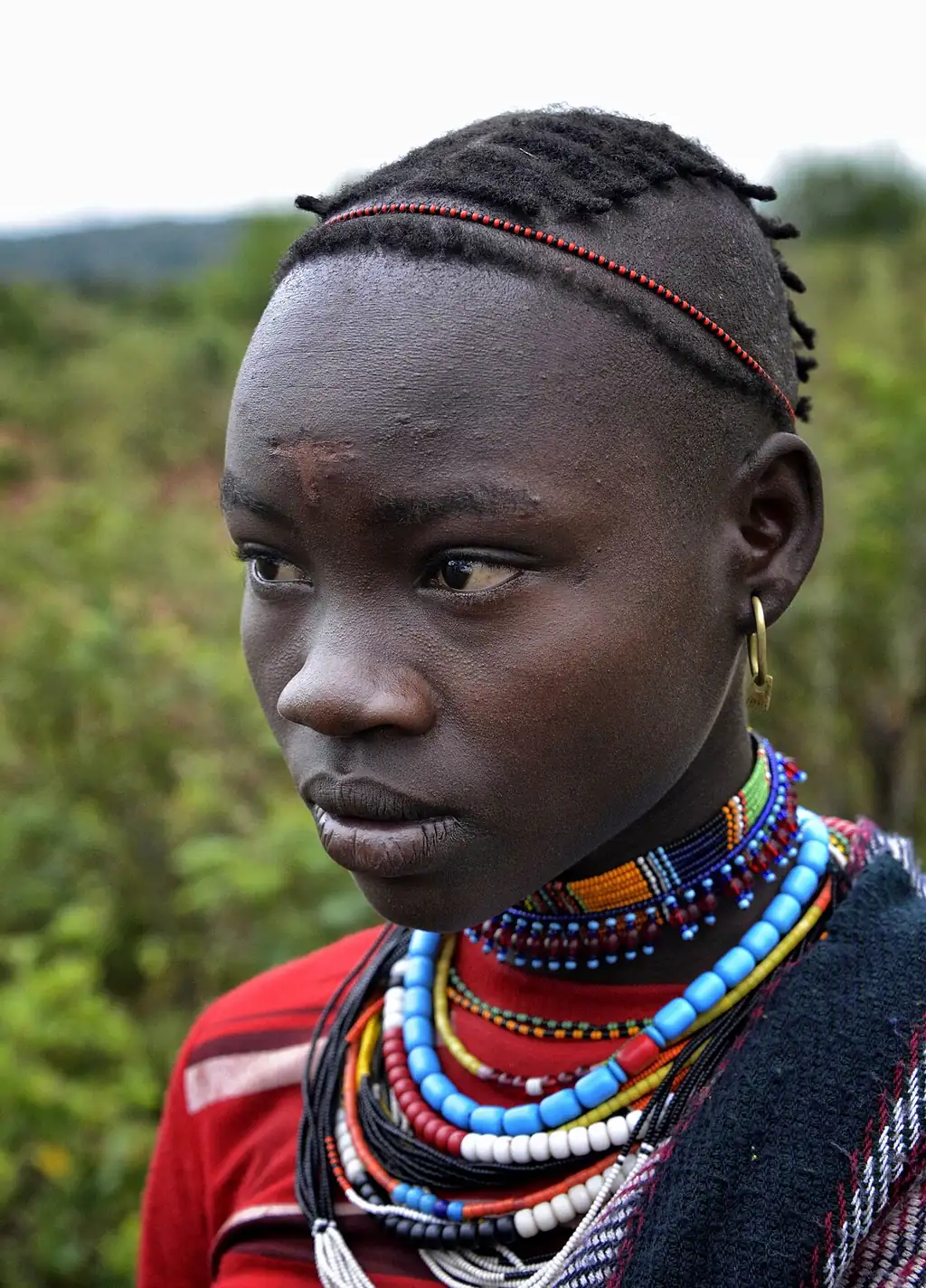
Ethiopia is home to some 80 to 90 ethnic groups, more than 80 languages and one of the youngest populations on Earth. This chapter explains who lives in the country, how people speak, live and organise themselves, and what it means to be Ethiopian in a place where identity is both a source of pride and a subject of constant debate.
A young, growing and mostly rural country
Roughly 125 to 135 million people live in Ethiopia, and the number is growing by about 2.5 to 2.8 percent a year. The average Ethiopian woman has about four children today, down from around seven in the 1980s, though the figure is higher in rural areas and below two in Addis Ababa. Life expectancy has risen from about 45 in 1990 to roughly 67 or 68 years now.
About three in four Ethiopians still live in the countryside, usually as small-scale farmers or herders, which gives the country one of the lowest urban shares in the world, at around 23 to 25 percent. But cities are growing fast, and the biggest, such as Addis Ababa, Dire Dawa, Adama, Mekelle, Gondar, Bahir Dar, Hawassa, Jimma, Dessie and Jigjiga, are changing quickly.
- Population
- ~125–135 million (estimate)
- Growth
- ~2.5–2.8% a year
- Median age
- ~19 years; about 40% under 15
- Urban share
- ~23–25%
- Fertility
- ~4 births per woman
- Life expectancy
- ~67–68 years
- Adult literacy
- Roughly 50–55%, higher among the young
Many peoples, many languages
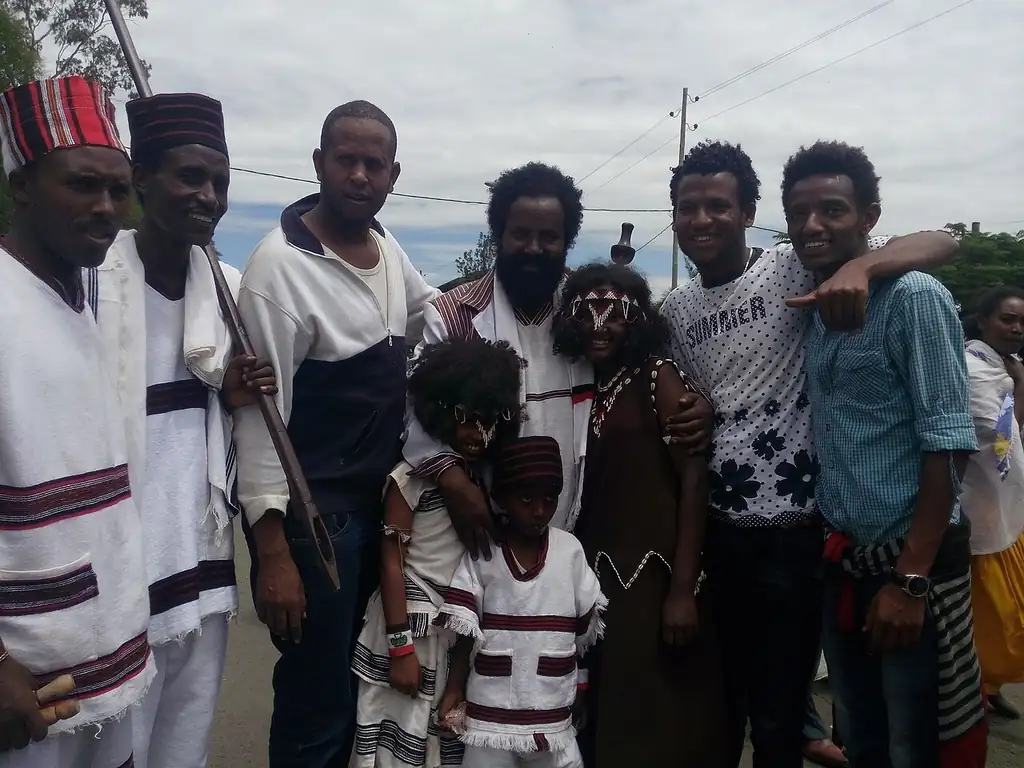
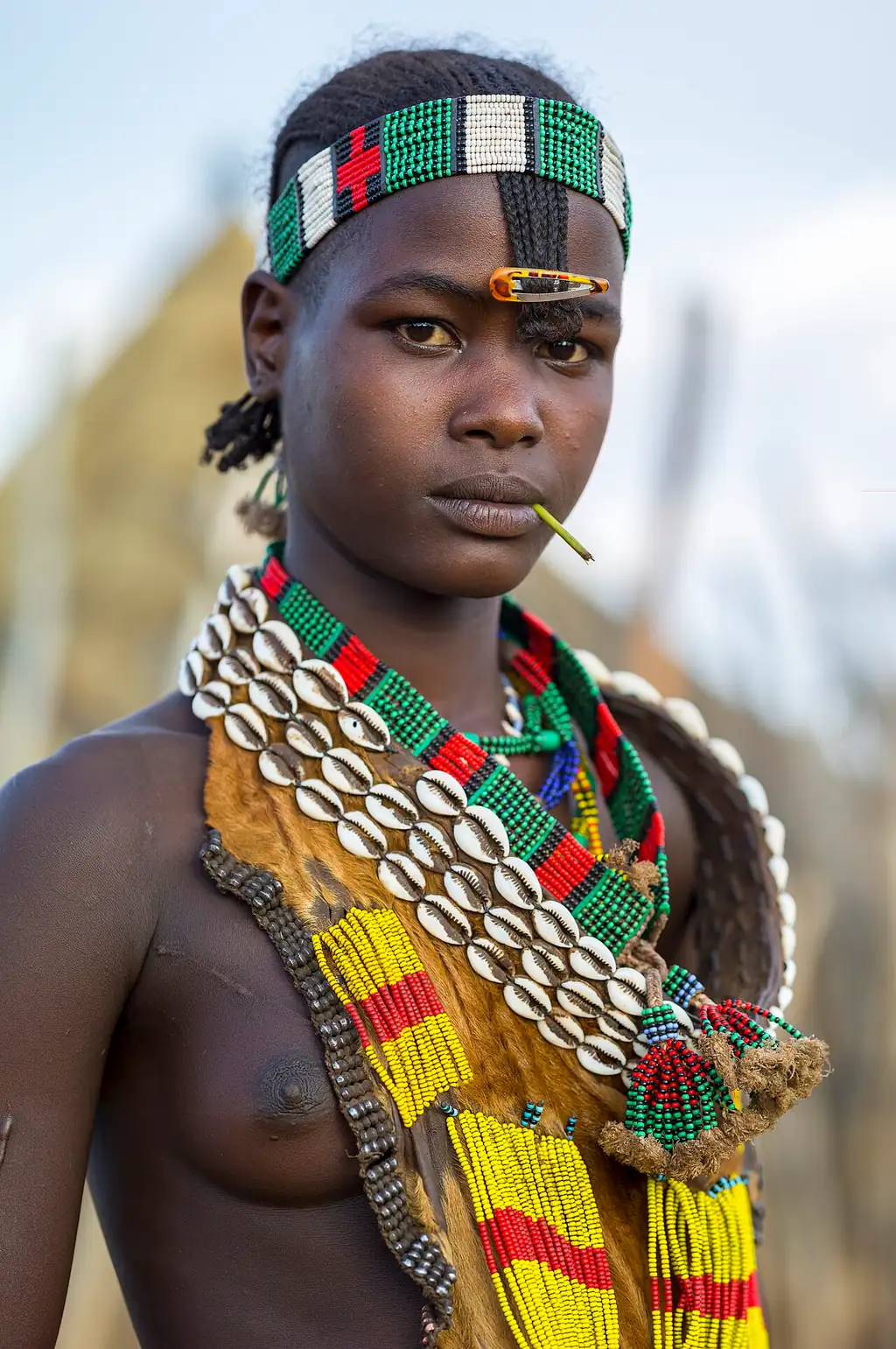
Ethiopia has more than 80 recognised languages belonging to four families: the Cushitic, Semitic and Omotic branches of Afroasiatic, and Nilo-Saharan. Ethnic identity is recognised in the constitution, in the shape of the regions and in the census, which is what makes the topic politically sensitive. For many people, identification with a group is real and meaningful. But ethnic labels are also fluid, overlapping and crossed by marriage, especially in the cities.
The largest groups (2007 census)
| Group | Share | Main language | Where, and what to know |
|---|---|---|---|
| Oromo | ~34.5% | Afaan Oromoo (Cushitic) | Oromia. Farming, coffee, herding; the traditional gada system; Muslims, Christians and followers of Waaqeffannaa |
| Amhara | ~26.9% | Amharic (Semitic) | The Amhara region, with communities across the country; mostly Orthodox Christian with a Muslim minority |
| Somali | ~6.2% | Somali (Cushitic) | Somali region; herders, Muslim, clan-based society |
| Tigrayan | ~6.1% | Tigrinya (Semitic) | Tigray; Orthodox Christian majority, Muslim minority |
| Sidama | ~4.0% | Sidaamu Afoo (Cushitic) | Sidama region; coffee and enset |
| Gurage | ~2.5% | Gurage languages (Semitic) | South-central highlands; famed traders and entrepreneurs |
| Wolayta | ~2.3% | Wolaytta (Omotic) | The south; densely populated, enset farming |
| Hadiya | ~1.7% | Hadiyya (Cushitic) | The south |
| Afar | ~1.7% | Afar (Cushitic) | Afar region and the Danakil; herders, salt trade |
| Gamo | ~1.5% | Gamo (Omotic) | Arba Minch area; weaving traditions |
| Many others | ~12% | — | Gedeo, Silte, Kefa, Harari, Agew, Gumuz, Anuak, Nuer, Surma, Mursi, Hamer, Konso, Dorze, Beta Israel and more |
These shares come from 2007 and have probably shifted. Several communities have only a few thousand members.
Languages in daily life
Amharic has been the language of government and national schooling for more than a century and is the most widely spoken second language. Since 2020 it shares the status of federal working language with Afaan Oromoo, Somali, Afar and Tigrinya, and each region chooses its own working language.
Afaan Oromoo is one of the most widely spoken languages in Africa. It is written in the Latin alphabet, known as Qubee, officially adopted in 1991. Tigrinya, Somali, Afar and others are used in regional administration and schools.
Ge’ez is the ancient liturgical language of the Orthodox Church, a role rather like that of Latin in Catholicism. It is also the origin of the fidel script used for Amharic and Tigrinya.
English is the medium of instruction in secondary school and university and the language of business and aviation. In primary school most regions teach in the mother tongue, which is a significant change from the imperial and Derg years.
Family and community life
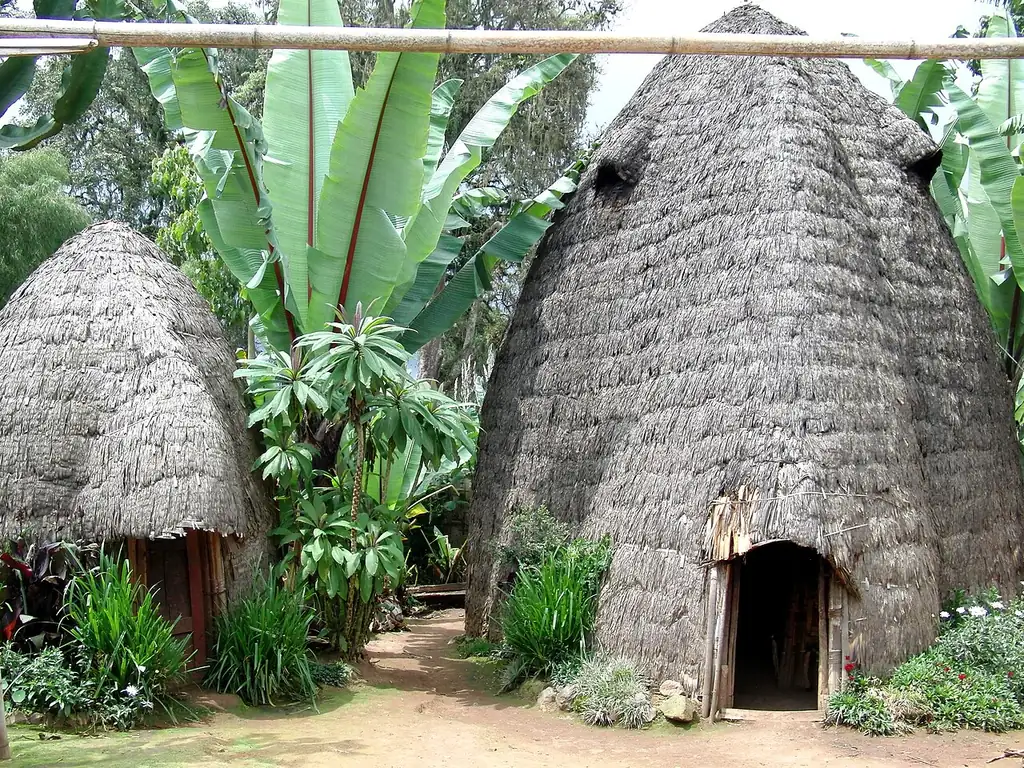
In Ethiopia, family means far more than parents and children. Extended families and kin networks matter greatly; elders are respected; weddings, funerals and religious feasts are big community occasions. About three-quarters of Ethiopians live in rural areas on small farms, usually a hectare or so, and the land is held through state-granted use rights rather than freely owned.
What makes Ethiopian communities distinctive is how they look after each other, through institutions that exist even in the largest cities:
Iddir
A burial and mutual-aid society. Members pay small regular dues, and in return the group helps with funeral costs and sits with the bereaved. Almost every neighbourhood has one.
Equb
A rotating savings group. Members pay in each month or week, and each takes the whole pot in turn. It is a savings club, a loan and a social circle at once.
Debo or wonfel
Communal work parties. Neighbours gather to help with harvesting, building or ploughing, and the host provides food and drink.
Elders’ councils
Customary systems such as the shimgelina (Amhara), jarsummaa (Oromo) and xeer (Somali) resolve disputes alongside the formal courts.
Young people are a force in all of this. A large, increasingly educated generation faces underemployment, and youth movements helped drive political change between 2014 and 2018.
Gender and the lives of women
Women are central to farming, cooking and the household economy, yet face legal and practical inequalities. At the top of public life, Ethiopia has seen progress: Sahle-Work Zewde served as President from 2018 to 2024, the federal cabinet of 2018 was gender-balanced, and women held the posts of Chief Justice and head of the electoral board in that period. Women remain under-represented in local government and in land titling.
The family and criminal codes of 2000 and 2005 raised the minimum marriage age to 18 and criminalised female genital mutilation and abduction. Prevalence of FGM fell from about 80 percent in 2000 to around 65 percent of women aged 15 to 49 in 2016, though it varies sharply by region and community. Maternal mortality has fallen significantly since 2000, thanks in large part to health extension workers, but many rural women still lack skilled help at birth.
In sport, women have been among the country’s greatest ambassadors. Derartu Tulu, Tirunesh Dibaba, Meseret Defar and Genzebe Dibaba are household names and a source of national pride.
The Ethiopian diaspora
Millions of Ethiopians live abroad. The largest communities are in the United States (several hundred thousand, clustered around Washington DC, Minneapolis, Atlanta, Seattle and Los Angeles), in Saudi Arabia and the Gulf states, in Israel (around 160,000 Beta Israel and their descendants), and in Sweden, Canada, the United Kingdom, Germany, Italy and South Africa.
They arrived in waves. In the 1970s and 1980s came refugees from Derg repression and famine. In the 1990s and 2000s came family and student migration and people using the US Diversity Visa programme. More recently there has been mass labour migration to the Gulf and South Africa, along with dangerous irregular journeys, described in Ethiopia in the world.
Remittances are officially worth several billion US dollars a year, and more once informal channels are counted, which makes them one of the country’s biggest sources of foreign currency. The diaspora also plays a visible role in politics, media, investment and charity.
Social issues to understand
- Displacement. Conflict, drought and floods have forced several million people from their homes in recent years. Estimates vary by agency and by year.
- Food insecurity. In bad years a large share of the population relies on safety-net programmes. The Productive Safety Net Programme is one of the largest social protection schemes in Africa.
- Inter-communal tension. Violence occurs in several border zones. Yet most Ethiopians live peacefully across ethnic lines, and intermarriage is widespread, particularly in the cities.
- Religious relations. Generally cooperative, though attacks and disputes have been reported. See the next chapter.
Ethnic labels are real for many people and fluid for many others. Both things are true, and the best way to understand Ethiopia is to listen to individuals rather than to categories.
ሁሉም ምዕራፎች
- 01 · Country at a glance
- 02 · History & civilization
- 03 · People & society
- 04 · Religion & belief
- 05 · Culture & everyday life
- 06 · Government & institutions
- 07 · Economy & development
- 08 · Natural environment
- 09 · Travel & tourism
- 10 · Practical living guide
- 11 · Ethiopia in the world
- 12 · Knowledge & reference